Best Author Branding Strategies for New Writers
Building a strong author brand helps new writers attract readers, establish credibility, and stand out in the competitive publishing industry. Learn the most effective branding strategies to grow your writing career.
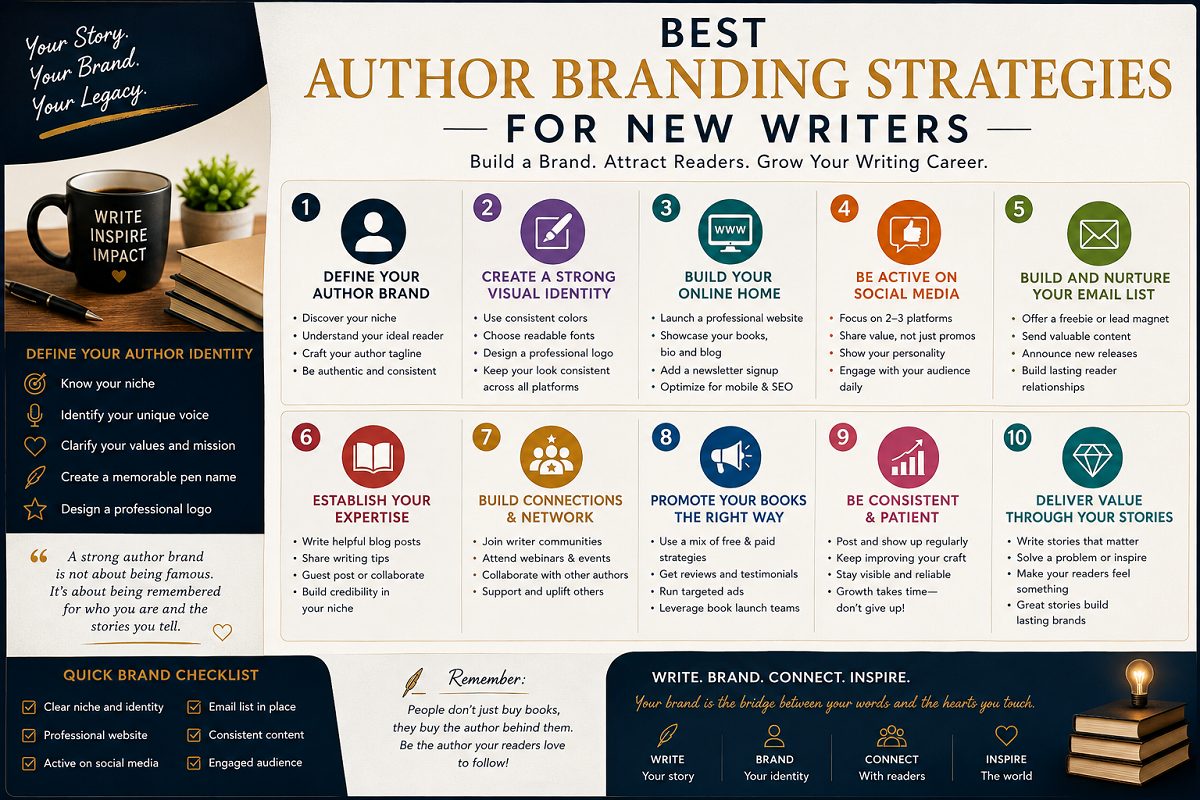
Publishing your first book is an exciting achievement, but becoming a successful author requires more than simply writing great content. In today's highly competitive publishing industry, readers often choose authors they recognize and trust. This is why building a strong author brand is one of the most important steps every new writer should take. A memorable brand helps you stand out, connect with readers, and create a lasting impression that extends beyond a single book.
Many first-time authors believe branding is only for large publishing companies or bestselling writers. In reality, building your author brand from the beginning creates a strong foundation for your entire writing career. Your brand reflects your personality, writing style, expertise, values, and the overall experience readers associate with your books. Whether you write novels, memoirs, business books, children's books, or educational guides, a clear and consistent brand helps readers remember you and encourages them to return whenever you publish a new title.
This guide explores the best author branding strategies for new writers who want to build credibility, grow their audience, and establish a successful publishing career.
Understand What Author Branding Means
Author branding is the process of creating a consistent identity that readers recognize across every platform. It includes your writing style, communication, visual design, website, social media profiles, book covers, and professional reputation.
A strong brand answers an important question for readers: "Why should I read books by this author?" When your message, values, and presentation remain consistent, readers begin to associate your name with a specific experience or area of expertise.
For fiction writers, branding often reflects storytelling style, genre, and emotional themes. For nonfiction authors, branding usually highlights knowledge, authority, and practical value.
Understanding your brand is the first step toward building a long-term relationship with readers.
Define Your Unique Identity
Before creating websites or social media profiles, spend time identifying what makes you different from other writers. Think about your background, experiences, writing style, expertise, and the topics you are passionate about.
Your unique identity becomes the foundation of your brand. Readers remember authors who have a distinctive voice and a clear purpose. Rather than trying to imitate bestselling writers, focus on presenting your authentic perspective.
Authenticity helps readers connect with you and creates trust that cannot be achieved through marketing alone.
Know Your Target Audience
Successful branding begins with understanding who your ideal readers are. Every decision you make, from your website design to your social media content, should appeal to the audience most likely to enjoy your books.
Consider factors such as age, interests, profession, reading preferences, and the challenges your readers face. A business author should communicate differently than a fantasy novelist or a children's book creator.
Knowing your audience allows you to create messaging that feels relevant and meaningful.
Create a Professional Author Website
Your website serves as the central hub of your author brand. It is often the first place readers, publishers, journalists, and event organizers visit when learning about your work.
A professional website should include your biography, book pages, blog, contact information, newsletter subscription form, testimonials, media resources, and links to purchase your books.
Search engine optimization should also be part of your website strategy. Publishing useful articles related to your books helps attract readers through organic search and establishes your expertise.
A well-designed website strengthens credibility and gives you complete control over your online presence.
Develop a Consistent Visual Brand
Visual consistency makes your author brand easier to recognize. Use the same professional author photograph, logo if applicable, colors, typography, and design style across your website, social media accounts, newsletters, and promotional materials.
Your visual identity should reflect the type of books you write. For example, authors of children's books often use bright and playful branding, while business authors generally prefer clean and professional designs.
Maintaining consistency helps readers remember your work and creates a polished impression.
Build Your Presence on Social Media
Social media platforms provide valuable opportunities to connect directly with readers. Instead of using them only for promotion, share valuable content that reflects your personality and expertise.
Talk about your writing journey, research process, publishing experiences, favorite books, industry insights, and everyday moments that relate to your audience. Readers appreciate authentic conversations more than constant advertisements.
Choose platforms where your target audience is most active and maintain a regular posting schedule.
Start an Email Newsletter
Email marketing remains one of the most effective ways to build long-term relationships with readers. Unlike social media, your email list belongs to you and allows direct communication with your audience.
Offer visitors a reason to subscribe by providing exclusive content, sample chapters, downloadable resources, or behind-the-scenes updates.
Regular newsletters help readers stay informed about new books, events, promotions, and writing progress while strengthening loyalty over time.
Publish Valuable Content
Content marketing plays a major role in author branding. Writing blog articles, recording podcasts, creating videos, or sharing educational content demonstrates your expertise and keeps your audience engaged between book releases.
If you write nonfiction, answer common questions within your niche. If you write fiction, share stories about your creative process, character development, or world-building inspiration.
Consistently publishing helpful content positions you as an active and knowledgeable author.
Network with Other Authors
Building relationships with fellow writers expands your visibility and creates opportunities for collaboration. Participate in online communities, writing conferences, webinars, podcasts, interviews, and literary events.
Networking introduces your work to new audiences while helping you learn from experienced professionals. Supporting other authors often leads to mutual promotion and stronger industry connections.
Successful branding is often strengthened through meaningful professional relationships.
Collect Reviews and Testimonials
Positive reader feedback strengthens your reputation and builds trust among potential buyers. Encourage readers to leave honest reviews on online bookstores and your website.
Testimonials can also be included in promotional materials, newsletters, and social media posts. Social proof reassures new readers that your books provide value and are worth their attention.
Consistently collecting reviews helps strengthen your overall author brand.
Maintain Consistency in Your Messaging
One of the biggest branding mistakes new authors make is constantly changing their tone, visual identity, or message. Readers should receive the same impression whether they visit your website, read your newsletter, browse your social media profiles, or purchase your books.
Consistency builds familiarity, and familiarity builds trust. Over time, readers begin to associate your name with a particular style, level of quality, or subject matter.
A consistent brand becomes easier to recognize and remember.
Continue Learning and Improving
Publishing trends, marketing platforms, and reader expectations continue to evolve. Successful authors regularly improve their branding strategies by learning new marketing techniques, updating their websites, improving their content, and adapting to industry changes.
Treat your brand as a long-term investment rather than a one-time project. Every book you publish strengthens your reputation and expands your audience.
Continuous improvement helps your brand remain relevant throughout your writing career.
Invest in Professional Branding Services
Although many new authors attempt to manage branding independently, professional assistance can significantly accelerate growth. Branding experts understand website design, graphic design, search engine optimization, content marketing, and audience development.
Professional branding services ensure that every aspect of your online presence communicates quality and consistency. From logo creation and website development to social media strategy and promotional materials, experienced professionals help authors build brands that inspire trust.
Investing in branding early often produces long-term benefits for your publishing career.
Conclusion
Building a strong author brand is one of the most valuable investments new writers can make. A clear and consistent brand helps readers recognize your work, trust your expertise, and become loyal supporters of your writing journey. By defining your identity, understanding your audience, creating a professional website, maintaining visual consistency, publishing valuable content, and engaging with readers, you establish a foundation for lasting success.
Author branding is not about pretending to be someone else. It is about presenting your authentic voice in a way that resonates with your audience and reflects the quality of your work. As your publishing career grows, your brand will become one of your greatest assets, helping you attract new readers, increase book sales, and create opportunities far beyond your books.